
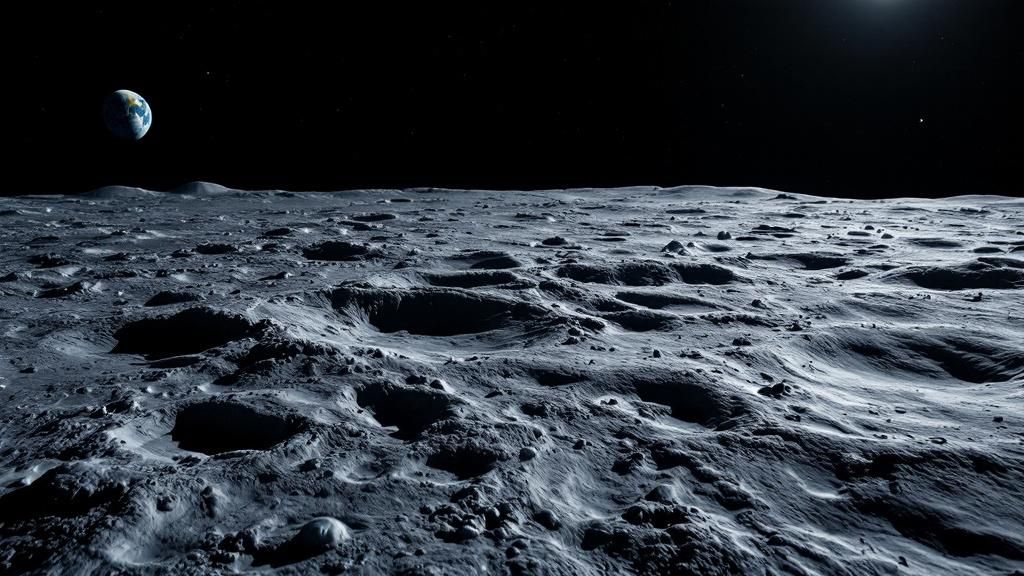
America is preparing to return to the Moon in a way it hasn’t done for over half a century. In the coming days, the National Aeronautics and Space Administration (Nasa) will initiate the Artemis II mission, sending four astronauts on a voyage around Earth’s nearest celestial neighbour. Whilst the nineteen sixties and seventies Apollo missions saw twelve astronauts set foot on the lunar surface, this fresh phase in space exploration brings distinct objectives altogether. Rather than simply planting flags and gathering rocks, the modern Nasa lunar initiative is motivated by the prospect of extracting precious materials, setting up a permanent Moon base, and ultimately using it as a launching pad to Mars. The Artemis initiative, which has required an estimated $93 billion and involved thousands of scientists and engineers, represents America’s answer to growing global rivalry—particularly from China—to dominate the lunar frontier.
The elements that establish the Moon deserving of return
Beneath the Moon’s barren, dust-covered surface lies a wealth of valuable materials that could reshape humanity’s relationship with space exploration. Scientists have discovered many materials on the lunar terrain that resemble those found on Earth, including uncommon minerals that are increasingly scarce on our planet. These materials are essential for contemporary applications, from electronics to sustainable power solutions. The abundance of materials in particular locations makes extracting these materials economically viable, particularly if a ongoing human operations can be established to mine and refine them efficiently.
Beyond rare earth elements, the Moon harbours substantial deposits of metals such as iron and titanium, which could be utilised for manufacturing and construction purposes on the Moon’s surface. Helium, another valuable resource—located in lunar soil, has widespread applications in medical and scientific equipment, such as superconductors and cryogenic systems. The wealth of these materials has led space agencies and private companies to consider the Moon not simply as a destination for exploration, but as a possible source of economic value. However, one resource stands out as significantly more essential to sustaining human life and enabling long-term lunar habitation than any metal or mineral.
- Rare earth elements concentrated in designated moon zones
- Iron and titanium for construction and manufacturing
- Helium for scientific instruments and medical apparatus
- Extensive metallic resources and mineral concentrations throughout the surface
Water: a critically important finding
The most significant resource on the Moon is not a metal or rare mineral, but water. Scientists have discovered that water exists locked inside certain lunar minerals and, most importantly, in significant amounts at the Moon’s polar areas. These polar regions contain perpetually shaded craters where temperatures remain exceptionally frigid, allowing water ice to gather and persist over millions of years. This discovery dramatically transformed how space agencies regard lunar exploration, transforming the Moon from a lifeless scientific puzzle into a conceivably inhabitable environment.
Water’s importance to lunar exploration should not be underestimated. Beyond supplying fresh water for astronauts, it can be split into hydrogen and oxygen through the electrolysis process, supplying breathable air and rocket fuel for spacecraft. This capability would dramatically reduce the expense of launching missions, as fuel would no longer require transportation from Earth. A lunar base with access to water resources could become self-sufficient, allowing prolonged human habitation and acting as a refuelling station for missions to deep space to Mars and beyond.
A emerging space race with China at its core
The original race to the Moon was essentially about Cold War rivalry between the United States and the Soviet Union. That geopolitical competition drove the Apollo programme and resulted in American astronauts reaching the lunar surface in 1969. Today, however, the competitive landscape has changed significantly. China has become the main competitor in humanity’s journey back to the Moon, and the stakes seem equally significant as they did during the Space Race of the 1960s. China’s space programme has made remarkable strides in the past few years, successfully landing robotic missions and rovers on the lunar surface, and the country has officially declared ambitious plans to put astronauts on the Moon by 2030.
The renewed urgency in America’s Moon goals cannot be separated from this competition with China. Both nations understand that establishing a presence on the Moon entails not only research distinction but also strategic significance. The race is not anymore simply about being the first to set foot on the surface—that milestone was achieved more than five decades ago. Instead, it is about obtaining control to the Moon’s most resource-rich regions and creating strategic footholds that could determine lunar exploration for the decades ahead. The rivalry has transformed the Moon from a joint scientific frontier into a competitive arena where national interests collide.
| Country | Lunar ambitions |
|---|---|
| United States | Artemis II crewed mission; establish lunar base; secure polar water ice access |
| China | Land humans on the Moon by 2030; expand robotic exploration; build lunar infrastructure |
| Other nations | Contribute to international lunar exploration; develop commercial space capabilities |
Asserting moon territory without ownership
There remains a curious legal ambiguity surrounding lunar exploration. The Outer Space Treaty of 1967 stipulates that no nation can establish title of the Moon or its resources. However, this worldwide treaty does not prohibit countries from securing operational authority over specific regions or gaining exclusive entry to valuable areas. Both the United States and China are well cognisant of this distinction, and their strategies demonstrate a commitment to establishing and exploit the most resource-rich locations, particularly the polar regions where water ice concentrates.
The matter of who governs which lunar territory could determine space exploration for decades to come. If one nation manages to establish a permanent base near the Moon’s south pole—where water ice deposits are most plentiful—it would secure substantial gains in respect of resource harvesting and space operations. This prospect has heightened the urgency of both American and Chinese lunar programmes. The Moon, formerly regarded as our collective scientific legacy, has become a domain where national interests demand rapid response and strategic placement.
The Moon as a stepping stone to Mars
Whilst obtaining lunar resources and creating territorial presence matter greatly, Nasa’s ambitions extend far beyond our nearest celestial neighbour. The Moon serves as a crucial testing ground for the technologies and techniques that will eventually transport people to Mars, a far more ambitious and demanding destination. By perfecting lunar operations—from touchdown mechanisms to survival systems—Nasa gains invaluable experience that directly translates to interplanetary exploration. The lessons learned during Artemis missions will become critical for the extended voyage to the Red Planet, making the Moon not merely a goal on its own, but a essential stepping stone for humanity’s next giant leap.
Mars constitutes the ultimate prize in planetary exploration, yet reaching it necessitates mastering difficulties that the Moon can help us grasp. The harsh Martian environment, with its thin atmosphere and extreme distances, demands durable systems and established protocols. By establishing lunar bases and conducting extended missions on the Moon, astronauts and engineers will develop the expertise necessary for Mars operations. Furthermore, the Moon’s near location allows for comparatively swift troubleshooting and replenishment efforts, whereas Mars expeditions will entail months-long journeys with limited support options. Thus, Nasa considers the Artemis programme as a crucial foundation, converting the Moon to a training facility for deeper space exploration.
- Testing life support systems in lunar environment before Mars missions
- Building sophisticated habitat systems and apparatus for extended-duration space operations
- Instructing astronauts in extreme conditions and crisis response protocols safely
- Perfecting resource management methods suited to distant planetary bases
Evaluating technology in a safer environment
The Moon provides a significant edge over Mars: closeness and ease of access. If something goes wrong during lunar operations, rescue missions and resupply efforts can be deployed relatively quickly. This protective cushion allows engineers and astronauts to experiment with advanced technologies and protocols without the severe dangers that would follow comparable problems on Mars. The two or three day trip to the Moon establishes a practical validation setting where advancements can be rigorously assessed before being deployed for the six-to-nine-month journey to Mars. This incremental approach to space exploration demonstrates sound engineering practice and risk management.
Additionally, the lunar environment itself creates conditions that closely mirror Martian challenges—radiation exposure, isolation, extreme temperatures and the need for self-sufficiency. By carrying out prolonged operations on the Moon, Nasa can determine how astronauts perform psychologically and physiologically during lengthy durations away from Earth. Equipment can be subjected to rigorous testing in conditions remarkably similar to those on Mars, without the additional challenge of interplanetary distance. This systematic approach from Moon to Mars constitutes a practical approach, allowing humanity to develop capability and assurance before pursuing the substantially more demanding Martian endeavour.
Scientific discovery and motivating the next generation
Beyond the practical considerations of resource extraction and technological progress, the Artemis programme holds significant scientific importance. The Moon functions as a geological record, preserving a record of the early solar system largely unchanged by the erosion and geological processes that continually transform Earth’s surface. By gathering samples from the lunar regolith and examining rock structures, scientists can reveal insights about planetary formation, the meteorite impact history and the conditions that existed billions of years ago. This scientific endeavour complements the programme’s strategic goals, offering researchers an unprecedented opportunity to broaden our knowledge of our space environment.
The missions also seize the imagination of the public in ways that purely robotic exploration cannot. Seeing human astronauts walking on the Moon, conducting experiments and maintaining a long-term presence resonates deeply with people worldwide. The Artemis programme serves as a concrete embodiment of human ambition and capability, inspiring young people to pursue careers in science, technology, engineering and mathematics. This inspirational aspect, though challenging to measure in economic terms, represents an invaluable investment in the future of humanity, cultivating curiosity and wonder about the cosmos.
Uncovering billions of years of Earth’s geological past
The Moon’s early surface has stayed largely unchanged for eons, creating an remarkable scientific laboratory. Unlike Earth, where geological processes continually transform the crust, the lunar landscape preserves evidence of the solar system’s violent early history. Samples collected during Artemis missions will expose information regarding the Late Heavy Bombardment, solar wind interactions and the Moon’s internal composition. These findings will significantly improve our understanding of planetary evolution and habitability, providing crucial context for comprehending how Earth developed conditions for life.
The wider impact of space exploration
Space exploration initiatives generate technological advances that penetrate everyday life. Technologies created for Artemis—from materials science to medical monitoring systems—regularly discover applications in terrestrial industries. The programme drives investment in education and research institutions, stimulating economic growth in advanced technology industries. Moreover, the cooperative character of modern space exploration, involving international collaborations and common research objectives, demonstrates humanity’s capacity for cooperation on ambitious projects that go beyond national boundaries and political divisions.
The Artemis programme ultimately constitutes more than a lunar return; it reflects humanity’s sustained passion to venture, uncover and extend beyond existing constraints. By developing permanent lunar operations, advancing Mars-bound technologies and motivating coming generations of research and technical experts, the initiative tackles several goals simultaneously. Whether evaluated by scientific discoveries, engineering achievements or the unmeasurable benefit of human achievement, the funding of space programmes generates ongoing advantages that reach well beyond the lunar surface.
